Kidney Function Test (KFT): What It Checks, When You Need It & How to Prepare
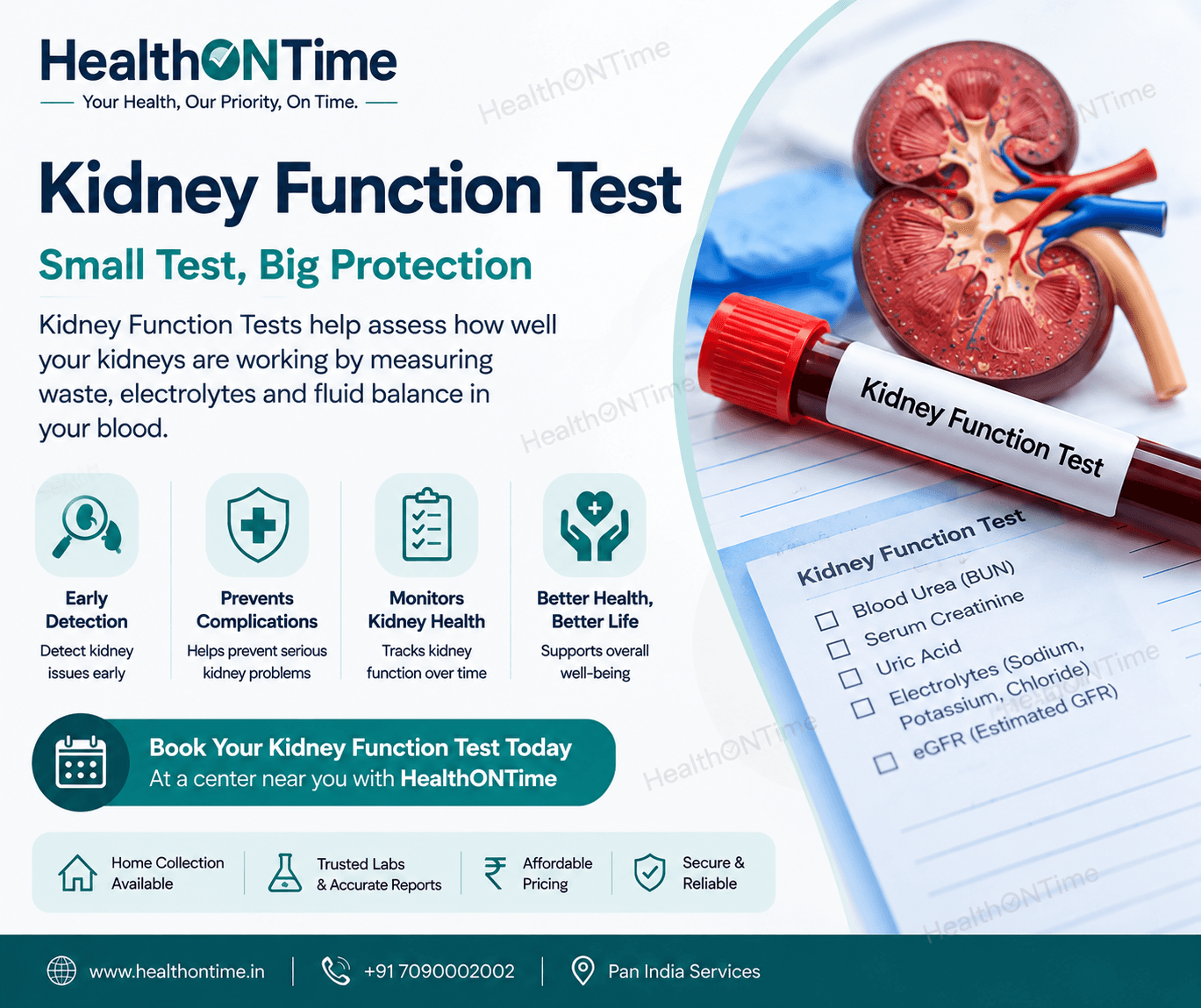
Your kidneys filter waste from your blood every single day — often without a single symptom telling you something's wrong. Here's what a Kidney Function Test actually measures, who should get one, and how to prepare, explained simply.
Your kidneys work quietly in the background, filtering waste and excess fluid from your blood around the clock. Because early kidney problems often don't cause noticeable symptoms, many people only think about kidney health after something goes wrong. A Kidney Function Test (KFT), also called a Renal Function Test (RFT), is one of the simplest ways to check how well your kidneys are working — before symptoms show up.
Quick answer: A Kidney Function Test is a group of blood (and sometimes urine) tests that measure substances like creatinine, urea and electrolytes to assess how efficiently your kidneys are filtering waste from your blood. It's commonly recommended as part of routine health checkups, for people with diabetes or high blood pressure, and when a doctor wants to monitor an existing kidney condition.
What Is a Kidney Function Test?
A Kidney Function Test is a panel of laboratory tests — not a single test — that together give a picture of kidney health. It typically combines a blood sample with a urine sample, and looks at how well your kidneys are removing waste products, balancing electrolytes and maintaining fluid balance in the body.
Because the kidneys perform several different jobs, no single number tells the whole story. That's why KFT panels usually include multiple parameters read together, rather than in isolation.
What Does a KFT Panel Usually Include?
| Parameter | What It Generally Indicates |
|---|---|
| Blood Urea / Blood Urea Nitrogen (BUN) | Waste product formed when the body breaks down protein |
| Serum Creatinine | Waste product from normal muscle activity, filtered by the kidneys |
| eGFR (estimated Glomerular Filtration Rate) | An estimate of how efficiently the kidneys filter blood |
| Uric Acid | A waste product that can build up when kidney filtration is reduced |
| Sodium, Potassium, Chloride (Electrolytes) | Minerals the kidneys help regulate for fluid and nerve balance |
| BUN/Creatinine Ratio | Helps assess the possible cause of abnormal kidney values |
| Urine Routine / Urine Albumin | Checks for protein, blood or other markers in urine when included |
The exact parameters included can vary between labs and packages — always check the specific test list before booking, especially if your doctor has prescribed a particular panel.
Why Might a Doctor Recommend a KFT?
- As part of a routine or preventive health checkup
- If you have diabetes, since high blood sugar can affect kidney filtration over time
- If you have high blood pressure, which is closely linked to kidney health
- To investigate symptoms such as unusual swelling, fatigue or changes in urination
- Before starting certain medicines that are processed by the kidneys
- To monitor kidney function during ongoing treatment for a known condition
- If there's a family history of kidney disease
Important: This is general information, not a diagnosis or a recommendation that you personally need this test. Whether a KFT is appropriate for you should be decided with a qualified healthcare professional based on your health history.
Signs That Sometimes Prompt a Kidney Check
Early kidney changes frequently show no symptoms at all — which is exactly why screening matters for at-risk individuals. When symptoms do appear, they can include:
- Persistent fatigue or low energy
- Swelling around the eyes, ankles or feet
- Noticeable changes in how often or how much you urinate
- Foamy or unusually coloured urine
- Persistent high blood pressure
- Loss of appetite or nausea
These symptoms can have several possible causes unrelated to the kidneys as well. If you notice any of them, it's worth discussing with a doctor rather than self-diagnosing.
Who Should Consider Regular Kidney Function Testing?
Testing frequency and necessity vary by individual, but kidney monitoring is commonly discussed for:
- Adults with diabetes (type 1 or type 2)
- Adults with high blood pressure
- People with a family history of kidney disease
- Adults over 60, as part of general preventive screening
- People on long-term medication that can affect kidney function
- Anyone with a previously abnormal kidney-related result
Your doctor is best placed to advise how often you should be tested based on your individual risk profile.
How to Prepare for a Kidney Function Test
- Ask whether fasting is required — some labs request 8–12 hours of fasting, others don't.
- Stay hydrated with plain water unless advised otherwise.
- Avoid intense exercise for a day before the test, as it can temporarily affect creatinine levels.
- Inform the lab or phlebotomist about any medicines or supplements you're taking.
- Don't stop any prescribed medication before the test unless your doctor specifically tells you to.
- Ask about the expected turnaround time for your report.
Can You Get a Kidney Function Test at Home?
Yes — home sample collection is available for KFT in many locations, depending on the diagnostic provider and your pincode. A trained phlebotomist visits your home to draw the blood sample, which is then transported to a laboratory for processing. This can be a convenient option for elderly patients, people managing chronic conditions, or anyone who prefers not to visit a collection centre in person.
Understanding Your KFT Report
Every laboratory report includes a reference range alongside your result. A value outside that range doesn't automatically mean you have kidney disease — results can be temporarily affected by hydration, recent exercise, certain medicines, or even the specific method a lab uses.
Don't interpret a single abnormal value on your own. Share your report with a doctor, who may recommend repeating the test, further evaluation, or simply monitoring the trend over future checkups.
KFT vs. Other Common Panels
| Test | What It Primarily Assesses |
|---|---|
| Kidney Function Test (KFT) | Kidney filtration, waste clearance, electrolyte balance |
| Liver Function Test (LFT) | Liver enzymes and related markers |
| Lipid Profile | Cholesterol and triglyceride levels |
| HbA1c | Average blood glucose over 2–3 months |
These are often ordered together as part of a broader health checkup, since kidney health, blood sugar and cardiovascular risk are closely connected.
What to Check Before Booking a KFT
- Which specific parameters are included in the panel
- Whether fasting is required for your specific test
- Home sample collection availability at your pincode
- Expected report turnaround time
- Whether the processing lab holds relevant accreditation
- The total payable price, including any home-collection charge
Frequently Asked Questions
What is a Kidney Function Test used for?
It's used to assess how well the kidneys are filtering waste and balancing electrolytes in the blood — commonly as part of routine checkups, or to monitor diabetes, high blood pressure, or an existing kidney condition.
Do I need to fast before a KFT?
It depends on the specific panel and lab. Some kidney tests require fasting, particularly when combined with other tests like blood glucose. Always confirm with the lab beforehand.
What is a normal creatinine level?
Reference ranges vary by lab, age, sex and the testing method used. Always refer to the range printed on your specific report, and discuss results with your doctor rather than comparing to a general number online.
Can high blood pressure affect kidney function?
Yes — high blood pressure and kidney health are closely linked, which is one reason KFT is often recommended for people managing hypertension.
How often should I get a kidney function test?
This depends on your individual risk factors, age and existing conditions. There's no single frequency that applies to everyone — ask your doctor what's appropriate for you.
Is a KFT the same as a urine test?
Not exactly. A KFT panel often includes a blood test, and may also include a urine test (such as urine albumin or urine routine) depending on what your doctor has prescribed.
Can I get a Kidney Function Test done at home?
Yes, in most locations where home sample collection is available. Coverage depends on your pincode and the diagnostic provider.
Final Thoughts
Kidney function often changes gradually and silently, which is exactly why a simple blood test can matter more than it seems. Whether you're managing diabetes, monitoring blood pressure, or simply due for a preventive checkup, a Kidney Function Test is a small step that can catch changes early — when they're easiest to manage.
Book a Kidney Function Test with HealthOnTime
HealthOnTime helps you explore and book Kidney Function Tests and other diagnostic panels from partner laboratories, with home sample collection available in selected locations.
Explore Kidney Function Tests on HealthOnTime
Medical Disclaimer
This article is intended for general health information only and should not be considered a substitute for professional medical advice, diagnosis or treatment. Whether a Kidney Function Test is appropriate for you, and how to interpret your results, should be discussed with a qualified healthcare professional.