Test for Thyroid Function: TSH, T3, T4, Normal Range, Preparation & More
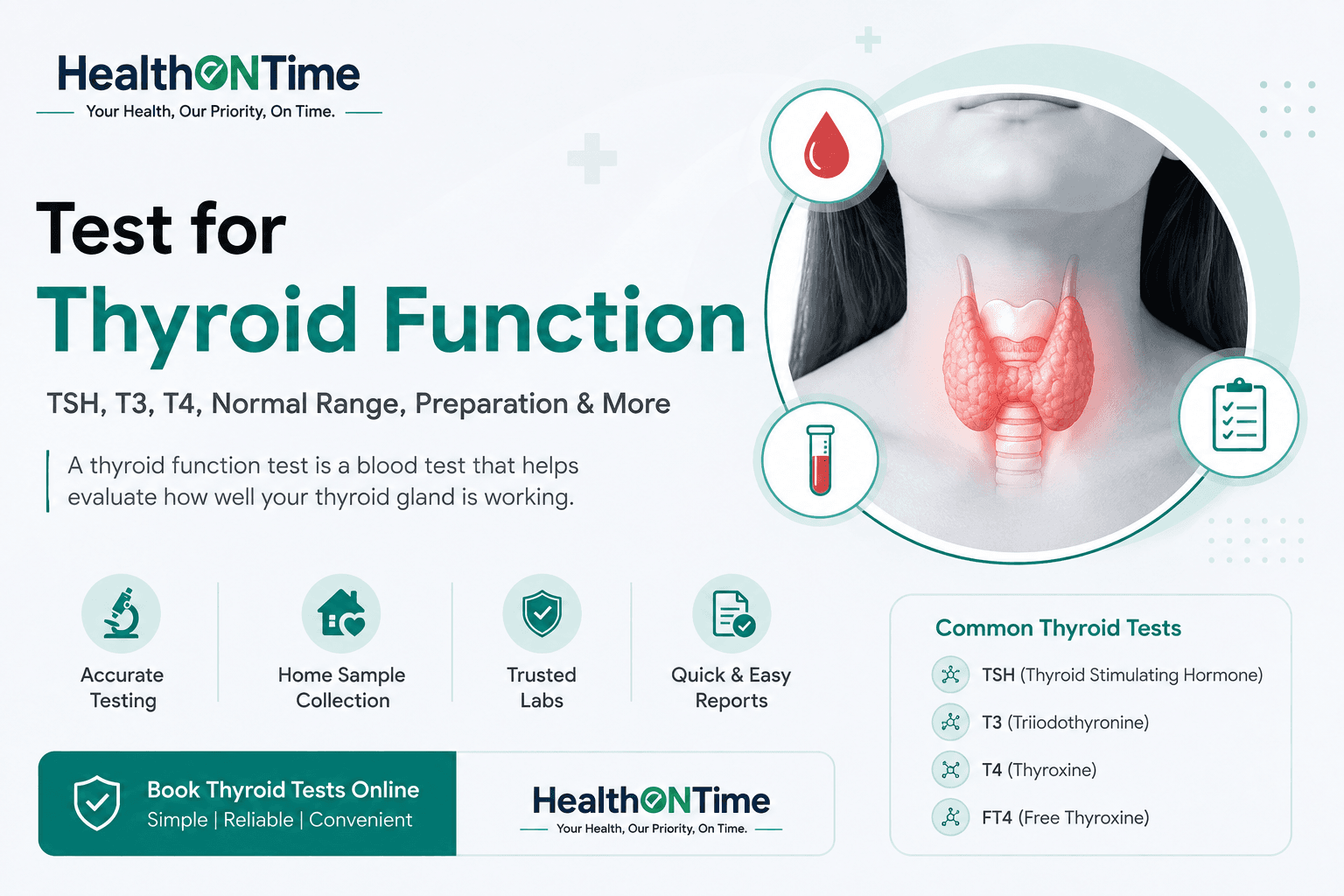
Looking for a test for thyroid function? Learn about TSH, T3, T4 and FT4 tests, thyroid test normal ranges, symptoms, preparation, costs, home sample collection and what thyroid test results may mean.
Quick Answer: A test for thyroid function is usually a blood test used to assess how well the thyroid is working. The TSH test is commonly used as the initial test, while Free T4, T3 and other tests may be added depending on the TSH result, symptoms and clinical situation.
Important: Thyroid test results should be interpreted using the reference range provided by the laboratory and in the context of your symptoms, medicines and medical history. A single abnormal result does not always establish a diagnosis.
What Is a Test for Thyroid Function?
A test for thyroid function is a group of blood tests used to assess the activity of the thyroid gland and the hormones involved in regulating the body's metabolism.
The thyroid is a small, butterfly-shaped gland located at the front of the neck. It produces thyroid hormones that influence energy use, body temperature, heart function and many other processes in the body.
The most commonly used thyroid blood tests include TSH, T4 and T3. Depending on the situation, a doctor may also recommend Free T4, Free T3 or thyroid antibody tests.
The American Thyroid Association notes that TSH is generally the starting point for evaluating thyroid function, with additional hormone testing used when appropriate.
Key takeaway
- TSH is commonly the first thyroid blood test.
- Free T4 can help assess thyroid hormone availability.
- T3 testing can be particularly useful when hyperthyroidism is suspected.
- Thyroid antibody tests may help identify autoimmune thyroid conditions.
- Your doctor may recommend different tests depending on your symptoms and previous results.
Which Tests Check Thyroid Function?
There is no single thyroid test that is appropriate for every person. The test selected depends on whether the purpose is screening, diagnosis, monitoring treatment or investigating a specific thyroid condition.
| Test | What it measures | Why it may be ordered |
|---|---|---|
| TSH | Thyroid-stimulating hormone | Common initial test for thyroid dysfunction |
| Free T4 (FT4) | Unbound thyroxine available to tissues | Helps assess thyroid hormone status, especially when TSH is abnormal |
| T3 / Free T3 | Triiodothyronine | May be useful when hyperthyroidism is suspected |
| Thyroid antibodies | Antibodies associated with autoimmune thyroid disease | May help investigate conditions such as Hashimoto's disease or Graves' disease |
1. TSH Test
TSH stands for thyroid-stimulating hormone. It is produced by the pituitary gland and signals the thyroid to produce thyroid hormones.
TSH is commonly used as the first test when evaluating thyroid function. A higher-than-expected TSH can occur when the thyroid is underactive, while a lower TSH can occur in hyperthyroidism. However, TSH results should not be interpreted in isolation because other conditions and medicines can affect thyroid testing.
If the TSH result is outside the laboratory's reference range, a doctor may recommend additional testing such as Free T4.
2. Free T4 (FT4) Test
Free T4 measures the unbound form of thyroxine in the blood. T4 is the main hormone produced by the thyroid gland and is converted into T3 in different tissues.
Free T4 is often evaluated together with TSH. The combination can help distinguish different patterns of thyroid dysfunction.
Remember: A laboratory's reference range should be used when reviewing Free T4 because ranges can vary between laboratories and testing methods.
3. T3 Test
T3, or triiodothyronine, is one of the thyroid hormones. T3 testing may be particularly useful when hyperthyroidism is suspected.
In some people with a low TSH, T3 can be elevated even when T4 is not elevated. For this reason, a doctor may request T3 testing when the initial results and symptoms suggest an overactive thyroid.
4. Thyroid Antibody Tests
Thyroid antibody tests are different from routine thyroid hormone tests. They look for antibodies that may be associated with autoimmune thyroid disorders.
Depending on the clinical situation, tests such as anti-TPO antibodies, thyroglobulin antibodies or TSH-receptor antibodies may be considered.
These tests are generally ordered for specific clinical reasons rather than as a routine thyroid screening test for everyone.
Thyroid Function Test: TSH, T3 and T4 Explained
People often search for a TSH, T3 and T4 test or a thyroid profile test. These terms can refer to different combinations of thyroid tests depending on the diagnostic laboratory.
| Hormone / Test | Main role |
|---|---|
| TSH | Signals the thyroid to produce hormones and is commonly used for initial screening. |
| T4 | The main thyroid hormone circulating in the blood. |
| Free T4 | Measures the unbound form of T4 available to body tissues. |
| T3 | An active thyroid hormone that may be especially useful when hyperthyroidism is suspected. |
What Is the Normal Range for a Thyroid Test?
There is no single universal thyroid test normal range that applies to every laboratory and every person.
Reference ranges can vary depending on the laboratory method, testing equipment, population and other factors. Age, pregnancy and certain medical conditions can also affect how thyroid results are interpreted.
For this reason, always compare your result with the reference range printed on your laboratory report rather than using a number found on the internet.
Why you should not self-diagnose from one number
A thyroid result that is outside the reference range does not automatically mean that you have a thyroid disease. Your doctor may consider symptoms, previous results, medicines, pregnancy status and other medical factors before making a diagnosis.
High TSH vs Low TSH: What Can It Mean?
TSH is often interpreted together with Free T4 and sometimes T3.
| Possible pattern | What it may suggest |
|---|---|
| High TSH + low FT4 | Can be consistent with primary hypothyroidism. |
| High TSH + normal FT4 | Can occur with subclinical hypothyroidism. |
| Low TSH + high FT4 and/or T3 | Can be consistent with hyperthyroidism. |
| Low TSH + low FT4 | May require evaluation for causes outside the thyroid, including pituitary problems. |
These patterns are for general education only. Your actual diagnosis should be made by a qualified healthcare professional using your complete clinical picture.
Symptoms That May Lead to Thyroid Testing
Thyroid disorders can cause a wide range of symptoms, and many of these symptoms can also occur with other health conditions.
Symptoms that may lead a doctor to consider thyroid testing include:
- Unexplained weight gain or weight loss
- Persistent tiredness or changes in energy
- Feeling unusually cold or unusually warm
- Changes in heart rate or palpitations
- Changes in bowel habits
- Changes in mood or concentration
- Dry skin or changes in hair
- Menstrual changes
- Muscle weakness or unusual tiredness
- Neck swelling or a lump around the thyroid area
Having one or more of these symptoms does not necessarily mean you have a thyroid disorder. A medical evaluation can help determine whether thyroid testing is appropriate.
When Should You Get a Thyroid Test?
A doctor may recommend thyroid testing when symptoms suggest an underactive or overactive thyroid, when monitoring a known thyroid condition, or when evaluating other clinical concerns.
People already taking thyroid medication may also need periodic testing to determine whether their treatment needs adjustment.
If you have previously been diagnosed with a thyroid condition, follow the testing schedule recommended by your doctor rather than relying only on symptoms.
Is Fasting Required for a Thyroid Test?
For many routine thyroid blood tests, fasting is not usually required. However, preparation instructions can vary depending on the exact tests included in your booking and whether other blood tests are being performed at the same time.
If your doctor or diagnostic laboratory has provided specific instructions, follow those instructions.
Can Medicines or Supplements Affect Thyroid Test Results?
Yes. Some medicines, supplements and health conditions can influence thyroid test results or the way results are interpreted.
One important example is biotin, a vitamin commonly found in hair, skin and nail supplements. The American Thyroid Association notes that biotin can interfere with some thyroid laboratory measurements and recommends discussing its use before testing.
Do not stop prescribed medicines on your own. Tell your doctor or laboratory about the medicines, vitamins and supplements you take so that appropriate testing and interpretation can be considered.
How Is a Thyroid Blood Test Done?
A thyroid blood test is generally performed using a blood sample collected from a vein in the arm.
- Choose the required thyroid test or package.
- Select a convenient diagnostic laboratory or available home collection option.
- A trained healthcare professional collects the blood sample.
- The sample is labelled and transported to the laboratory.
- The laboratory processes the sample and generates the report.
- Your report can then be reviewed with your doctor.
Home collection: Depending on your location and test availability, you may be able to book thyroid blood testing with sample collection from your home instead of visiting a diagnostic centre.
Thyroid Test Price in India
The thyroid test price in India can vary depending on the test, diagnostic laboratory, city, collection method and whether you choose an individual test or a thyroid profile.
A basic TSH test is generally different in price from a profile containing T3, T4 and TSH. Tests that include Free T3, Free T4 or thyroid antibodies can cost more.
Because diagnostic prices change and can vary by location, it is better to check the current price before booking rather than relying on an old price quoted online.
Before comparing thyroid test prices, check:
- Which parameters are included
- Whether home sample collection is available
- Expected report turnaround time
- Laboratory accreditation or quality information
- Whether the displayed price includes sample collection
- Whether the same test is being compared across laboratories
Thyroid Test at Home: Is It Possible?
Yes, thyroid blood tests may be available with home sample collection in many locations.
With home collection, a trained phlebotomist visits the selected address, collects the required blood sample and the sample is transported to the diagnostic laboratory for processing.
Availability depends on the test, location and diagnostic provider. Before booking, check whether your pincode is covered and whether the required thyroid test is available for home collection.
How HealthONTime Can Help You Find Thyroid Tests
HealthONTime helps users explore diagnostic testing options from participating laboratories. Depending on your location, you can check available thyroid tests, compare available options and choose a suitable diagnostic service.
For people who prefer not to travel to a collection centre, home sample collection may also be available for eligible tests and locations.
When booking a thyroid test through HealthONTime, check the exact test name and parameters included in the selected option. A “thyroid profile” can differ between laboratories, so it is important to confirm whether it includes TSH, T3, T4, Free T3 or Free T4.
Looking for a Thyroid Test?
Check available thyroid tests and diagnostic options in your location with HealthONTime.
Compare available options before booking.
Thyroid Function Test vs Thyroid Profile: Are They the Same?
The terms thyroid function test (TFT), thyroid profile and thyroid panel are often used for blood tests that evaluate thyroid hormones. However, the exact tests included can differ between laboratories.
For example, one laboratory may offer T3, T4 and TSH, while another may offer Free T3, Free T4 and TSH.
Therefore, always check the individual parameters included in the package before booking.
What Happens After an Abnormal Thyroid Test?
An abnormal thyroid test does not always mean that treatment is immediately required.
Your doctor may review your symptoms, medical history, medicines and previous laboratory results. Depending on the result, additional testing may be recommended.
For example, an abnormal TSH result may lead to Free T4 testing. In selected situations, T3 or thyroid antibody testing may also be considered.
The next step depends on the pattern of results and the individual patient.
Frequently Asked Questions About Thyroid Function Tests
What is the best test for thyroid function?
TSH is commonly used as the initial blood test for evaluating thyroid function. Depending on the TSH result and clinical situation, a doctor may recommend Free T4, T3 or other thyroid tests.
Is TSH enough to check the thyroid?
TSH is often the starting test, but it may not be sufficient in every situation. If TSH is abnormal or certain conditions are suspected, additional tests such as Free T4 or T3 may be required.
What are the main thyroid blood tests?
The main thyroid blood tests include TSH, T4, Free T4 and T3. Thyroid antibody tests may be used when an autoimmune thyroid condition is suspected.
Is fasting required for a thyroid test?
Fasting is generally not required for many routine thyroid blood tests. However, preparation can depend on the exact tests being performed, so follow the instructions provided by your doctor or diagnostic laboratory.
Can I take my thyroid medicine before a blood test?
Do not change or stop prescribed thyroid medication without medical advice. Ask your doctor or laboratory whether you should take your usual dose before the particular blood test.
Can biotin affect thyroid test results?
Yes. Biotin supplements can interfere with some thyroid laboratory measurements. Tell your doctor or laboratory if you take biotin or supplements containing biotin before testing.
Can I get a thyroid test at home?
Home sample collection for thyroid blood tests is available in many locations. Availability depends on the diagnostic provider, test and pincode.
How much does a thyroid test cost in India?
The thyroid test price varies by city, laboratory and test type. A single TSH test may cost less than a thyroid profile containing T3, T4 and TSH or a panel that includes Free T3 and Free T4.
What is a normal TSH level?
TSH reference ranges vary between laboratories and may also depend on factors such as age and pregnancy. Always use the reference range printed on your laboratory report and discuss unusual results with your doctor.
What is the difference between T3 and T4?
T4 is the main thyroid hormone circulating in the blood, while T3 is a more active thyroid hormone. The body converts much of its T4 into T3 in tissues.
What does high TSH mean?
A high TSH can indicate an underactive thyroid, particularly when Free T4 is low. However, TSH should be interpreted together with other results and the clinical situation.
What does low TSH mean?
A low TSH can occur with an overactive thyroid, especially when Free T4 or T3 is elevated. Other causes are possible, so the result should be evaluated by a healthcare professional.
Final Takeaway
A test for thyroid function can help doctors evaluate whether the thyroid is working normally or whether further investigation may be needed. TSH is commonly used as the starting point, while Free T4, T3 and thyroid antibody tests may be added depending on the situation.
If you are experiencing symptoms that may be related to thyroid problems or have been advised to monitor your thyroid, speak with a qualified healthcare professional about which test is appropriate for you.
If you are looking for a thyroid test, thyroid profile, TSH test or thyroid blood test at home, HealthONTime can help you explore available diagnostic options based on your location.
Medical Disclaimer: This article is intended for general educational purposes only and should not be considered medical advice, diagnosis or treatment. Thyroid test results can vary depending on the laboratory, testing method and individual health factors. Always consult a qualified healthcare professional for interpretation of your results and medical decisions.