Why Regular Health Checkups Are Important: Benefits, Tests & More
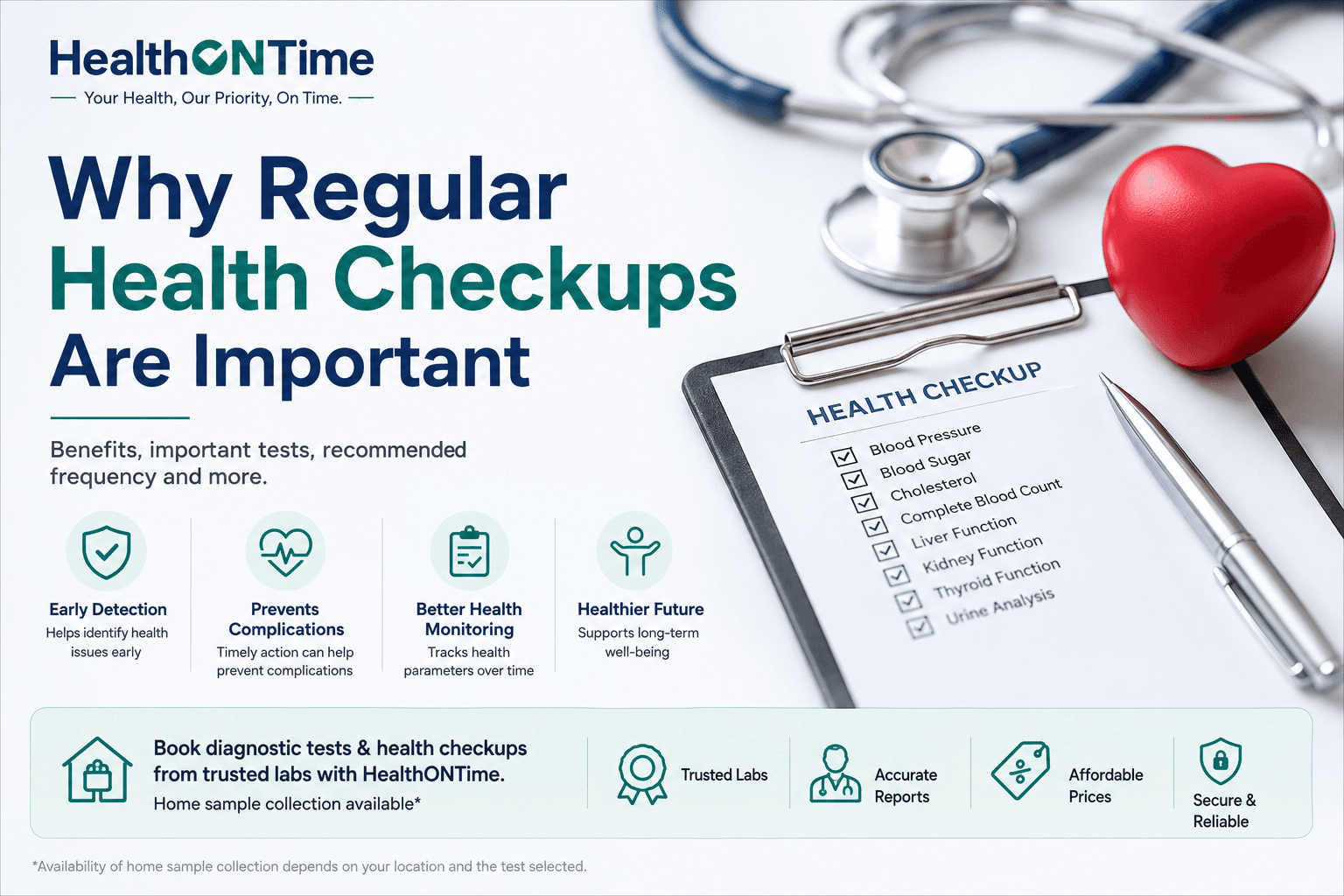
Regular health checkups can help identify certain health risks early, monitor important health parameters and guide preventive care. Learn which tests may be included, how often checkups may be needed and what to consider before booking a health checkup.
Many people visit a doctor only when they feel unwell. However, some health conditions can develop gradually without causing noticeable symptoms in the early stages. This is one reason regular health checkups can be an important part of preventive healthcare.
A routine health checkup gives you an opportunity to review important aspects of your health, identify certain risk factors, monitor existing conditions and discuss appropriate screening with a healthcare professional.
The tests you need are not the same for everyone. Your age, medical history, family history, lifestyle, existing health conditions and previous test results can all influence which tests or screenings may be appropriate.
Quick Answer: Regular health checkups can help identify certain health problems or risk factors early, monitor conditions such as diabetes and high blood pressure, and help you and your healthcare professional decide which preventive screenings may be appropriate.
What Is a Regular Health Checkup?
A regular health checkup is a planned health assessment that can take place even when you do not have a specific symptom or illness.
Depending on your age and health profile, a checkup may include a discussion of your medical history, physical measurements, laboratory tests and preventive screening.
Common assessments may include:
- Blood pressure measurement
- Weight and body mass index (BMI)
- Blood sugar testing
- Cholesterol or lipid profile
- Complete blood count (CBC)
- Kidney function tests when appropriate
- Liver function tests when appropriate
- Thyroid testing when indicated
- Urine examination
- ECG or other investigations when clinically appropriate
Important: A health checkup does not mean that every person needs every available medical test. Tests should be selected according to individual health needs and professional medical advice.
Why Are Regular Health Checkups Important?
1. They Can Help Identify Health Problems Early
Some conditions can remain unnoticed for a long time. Regular assessments may identify abnormal blood pressure, blood sugar, cholesterol or other health parameters before a person develops obvious symptoms.
Early identification does not necessarily mean that a disease is present. An abnormal result may require repeat testing, additional evaluation or discussion with a healthcare professional.
2. They Help Monitor Blood Sugar
Blood glucose testing can help assess blood sugar levels and may be recommended when screening for diabetes or monitoring an existing condition.
Depending on the situation, commonly used tests include:
- Fasting blood glucose
- HbA1c
- Oral glucose tolerance test (OGTT), when indicated
People with certain risk factors, including a family history of diabetes or other medical risk factors, may need screening according to medical advice.
3. They Help Monitor Blood Pressure
High blood pressure may not always cause noticeable symptoms. Measuring blood pressure during routine healthcare visits can help identify readings that may need further assessment.
If elevated readings are found repeatedly, a healthcare professional may recommend additional monitoring or investigation.
4. They Help Assess Cholesterol and Cardiovascular Risk
A lipid profile measures blood fats such as total cholesterol, LDL cholesterol, HDL cholesterol and triglycerides.
These results are considered together with other factors such as age, blood pressure, diabetes, smoking history and family history when assessing cardiovascular risk.
5. They Can Help Monitor Kidney and Liver Health
Blood and urine tests can provide useful information about kidney and liver function when these investigations are appropriate.
Kidney-related tests may include:
- Creatinine
- eGFR
- Urea
- Urine examination
- Urine albumin testing when indicated
Liver-related tests may include:
- ALT
- AST
- Bilirubin
- Alkaline phosphatase
- Albumin
Common Health Checkup Tests
The tests included in a health checkup vary between individuals and packages. Here is a general overview of commonly used investigations:
| Test | What It Generally Checks |
|---|---|
| Complete Blood Count (CBC) | Red blood cells, white blood cells, platelets and other blood parameters |
| Fasting Blood Glucose | Blood glucose after fasting |
| HbA1c | Average blood glucose over approximately 2–3 months |
| Lipid Profile | Cholesterol and triglyceride levels |
| Liver Function Tests | Selected markers related to liver function |
| Kidney Function Tests | Selected markers related to kidney function |
| Thyroid Tests | Thyroid hormone levels when testing is indicated |
| Urine Examination | Various urinary and metabolic parameters |
| ECG | Electrical activity of the heart when clinically appropriate |
What Are the Benefits of Regular Health Checkups?
Regular health assessments can be useful for several reasons:
- Early identification: Certain abnormalities may be identified before they cause noticeable symptoms.
- Health monitoring: Previous and current results can be compared to identify changes over time.
- Preventive care: A checkup provides an opportunity to discuss appropriate screening, vaccinations and lifestyle factors.
- Risk assessment: Family history, lifestyle and existing conditions can be reviewed.
- Better health awareness: Understanding your health parameters can help you make informed decisions with your healthcare professional.
Who Should Get Regular Health Checkups?
Preventive healthcare can be useful for adults even when they feel healthy. However, the type and frequency of assessment should be based on individual circumstances.
Factors that may influence your screening needs include:
- Age
- Sex
- Family medical history
- Weight and lifestyle
- Smoking or tobacco use
- Alcohol consumption
- Existing medical conditions
- Previous abnormal test results
- Current medicines
- Other individual risk factors
Health Screening in India
India's public health programmes include population-based screening and early detection initiatives for major non-communicable diseases. The Ministry of Health and Family Welfare has included screening for conditions such as hypertension and diabetes among adults aged 30 years and above in its national NCD programme.
However, population-level screening recommendations should not be interpreted as a requirement for every individual to undergo the same set of tests. Your personal screening needs may differ depending on your health profile and medical history.
How Often Should You Get a Health Checkup?
There is no single health checkup schedule that is appropriate for everyone.
Some people may benefit from periodic preventive visits, while people with diabetes, hypertension, thyroid disorders, kidney disease or other medical conditions may need more frequent monitoring.
Your healthcare professional can recommend an appropriate schedule based on your age, medical history, risk factors and previous results.
Health Checkups for Different Age Groups
Young Adults
Depending on individual risk factors, a routine health assessment may include blood pressure, weight, lifestyle assessment and selected screening tests when appropriate.
Adults in Their 30s and 40s
As age and risk factors change, healthcare professionals may recommend monitoring blood pressure, blood sugar, cholesterol and other health parameters based on individual needs.
Adults Over 50
Preventive healthcare may become increasingly important with age. Additional age- and risk-specific screening may be recommended depending on your medical history, family history and other factors.
Health Checkup vs Full Body Checkup
The terms health checkup and full body checkup are often used interchangeably, but they do not necessarily mean the same thing.
A regular health checkup may involve a healthcare consultation, physical measurements and selected investigations. A full body health checkup package may combine several laboratory tests into one package.
A larger package is not automatically better. The most useful tests are the ones that are appropriate for your individual health needs.
Remember: More tests do not always mean better healthcare. Discuss the tests that are appropriate for you with a qualified healthcare professional.
How to Prepare for a Health Checkup
Preparation depends on the tests included in your checkup.
- Check whether fasting is required.
- Follow the laboratory's fasting instructions if applicable.
- Drink water unless you have been specifically advised otherwise.
- Carry previous medical reports if they are relevant.
- Keep a list of your current medicines and supplements.
- Tell the healthcare professional about existing medical conditions.
- Share relevant family medical history.
- Ask when and how your reports will be available.
Do not stop prescribed medicines before a test unless your healthcare professional specifically tells you to do so.
Can a Health Checkup Detect Diseases Before Symptoms?
Some screening tests are designed to identify certain diseases or risk factors before symptoms appear. However, no health checkup can detect every possible disease.
A normal report also does not guarantee that a person will never develop a health condition in the future. Preventive healthcare works best when appropriate screening is combined with healthy lifestyle habits and timely medical advice.
What Should You Do If a Test Result Is Abnormal?
An abnormal laboratory result does not automatically mean that you have a disease.
Results can sometimes be influenced by factors such as fasting status, medicines, temporary illness, exercise, hydration and laboratory methods.
If a result is outside the laboratory's reference range, discuss it with your doctor or healthcare professional. Depending on the result, they may recommend repeating the test, additional investigations or monitoring over time.
Do not diagnose yourself based on a single laboratory result.
Can You Get a Health Checkup at Home?
Many diagnostic tests can be performed using samples collected at home, depending on the test and service availability in your location.
With home sample collection, a trained phlebotomist visits your home, collects the required sample and arranges for it to be transported to the appropriate diagnostic laboratory.
Home collection can be particularly convenient for senior citizens, people with busy schedules and anyone who prefers not to travel to a diagnostic collection centre.
What to Check Before Booking a Health Checkup
- Whether the required tests are included
- Whether fasting is required
- Laboratory or diagnostic provider details
- Home sample collection availability
- Sample collection timings
- Expected report turnaround time
- Whether any additional consultation is required
Frequently Asked Questions
Why are regular health checkups important?
Regular health checkups can help identify certain health risks early, monitor existing conditions and help determine which preventive screenings may be appropriate for you.
Is a full body checkup necessary every year?
Not necessarily. The appropriate frequency and tests depend on your age, medical history, family history and individual risk factors.
Can I get a health checkup if I have no symptoms?
Yes. Preventive healthcare can involve health assessments and screening even when you do not have a specific symptom.
Which blood tests are commonly included in a health checkup?
Depending on the package and individual requirements, commonly used tests may include CBC, blood glucose, HbA1c, lipid profile, liver function tests, kidney function tests and thyroid tests.
Is fasting required for a health checkup?
It depends on the tests included. Some blood tests require fasting while others do not. Always check the preparation instructions before your appointment.
Can I get a blood test at home?
Home sample collection is available for many diagnostic tests in locations where the service is offered. Availability depends on the test, diagnostic provider and location.
Does a normal health report mean that I am completely healthy?
No. A health report reflects the tests performed at that particular time. It cannot rule out every possible disease or guarantee that you will not develop a health condition in the future.
Conclusion
Regular health checkups are an important part of preventive healthcare. They provide an opportunity to monitor important health parameters, identify certain risks early and discuss appropriate screening with a healthcare professional.
The goal is not to undergo every medical test available. Instead, the focus should be on choosing the right tests based on your age, medical history, family history and individual risk factors.
If you are due for a health assessment, speak with a qualified healthcare professional about which checkups or screenings may be appropriate for you.
Find Diagnostic Tests with HealthONTime
HealthONTime helps you explore and book diagnostic tests and health checkup services from available partner laboratories, with home sample collection available for selected tests and locations.
Medical Disclaimer
This article is intended for general health information and should not be considered a substitute for professional medical advice, diagnosis or treatment. The appropriate tests and screening schedule vary between individuals. Consult a qualified healthcare professional for advice based on your personal health history and risk factors.